
Last updated September 24, 2026
Free in-home measure and quote - PGT, CGI and CWS impact lines compared on your actual openings, style by style



 Before
 After
After Before
 After
After Before
 After
AfterSeasonal Windows & Doors Care for Hialeah: Year-Round Homeowner’s Guide
The 90 days after hurricane season ends, December through February, are when Hialeah impact window hardware corrodes fastest. Salt deposited during storm events sits undiluted on hardware surfaces during the dry season’s low-rainfall period, and homeowners who put their windows out of mind after November 30 often discover seized rollers, pitted hinges, and failed locking cams by March. This guide assigns concrete maintenance tasks to specific months rather than vague seasonal categories, because Hialeah has no true off-season for window and door stress. The city trades June-through-November hurricane loading for December-through-May salt-air corrosion and UV-driven sealant degradation. What follows is a 12-month task calendar built from what we’ve documented across 18,000+ openings since 2012, including the specific lubricants, inspection sequences, and contractor-versus-DIY thresholds that protect your glazing investment.
Quick Answer
Hialeah homeowners should perform impact window and door maintenance every month, rotating through hardware lubrication (January), sealant inspection (April), weep hole clearing (June), and post-storm glass inspection (September). The dry season’s salt accumulation and the wet season’s wind loading create alternating failure modes that a quarterly checklist misses. Use silicone-based lubricants on HVHZ hardware, avoid WD-40 and bleach-based cleaners, and inspect sealant twice yearly because Hialeah’s urban heat island accelerates cure degradation compared to suburban Miami-Dade addresses.
Table of Contents
- January-March: The Dry Season Salt Damage Window
- April-May: Pre-Wet Season Sealant Check
- June-August: Wet Season Preparation and Active Monitoring
- September-November: Post-Storm Inspection Protocol
- Lubricants and Cleaners: What Works on HVHZ Hardware
- Hialeah’s Urban Heat Island and Sealant Life
- Pre-Storm Preparation for Impact Windows
- Common Mistakes to Avoid
- When to Call a Professional
- Frequently Asked Questions
 Before
 After
AfterJanuary-March: The Dry Season Salt Damage Window
This is the most misunderstood maintenance period in Hialeah. Homeowners relax after hurricane season. They should not.
Between December and February, Miami-Dade averages 2.1 inches of rainfall monthly. Salt crystals from September and October storm events remain on window hardware, frame surfaces, and door thresholds. Without regular wetting to dilute and wash them away, these deposits concentrate. We’ve opened track assemblies in West Hialeah homes during February where the bottom roller axle showed pitting visible to the naked eye. The homeowner had cleaned the glass in November and assumed the job was finished.
January task: hardware lubrication. Remove the sash or open the panel fully. Vacuum the track or sill with a soft brush attachment. Apply a dry-film silicone lubricant to rollers, hinges, and locking cams. Work the hardware through its full range of motion three times. Wipe excess with a lint-free cloth. The lubricant film left behind repels salt and prevents the galvanic corrosion that seizes stainless steel components against aluminum frames.
February task: drainage path verification. Pour one cup of water into the sill track of a horizontal sliding window. It should exit through the weep holes within 30 seconds. If it pools, the weep holes are blocked with salt residue, insect debris, or paint overspray. Clear with a pipe cleaner or compressed air directed outward, never inward, to avoid forcing debris into the frame cavity.
March task: frame and fastener inspection. Examine exposed fasteners on door hinges and window locking hardware. Look for white powder (aluminum oxidation) or red-brown staining (steel corrosion). In our experience, fasteners on east-facing elevations in Hialeah show degradation 18 months faster than west-facing equivalents due to prevailing wind patterns carrying salt from Biscayne Bay. Replace corroded fasteners with manufacturer-specified stainless steel or coated equivalents. Do not substitute generic hardware store screws; thread pitch and head profile matter for load distribution in impact-rated assemblies.
The window replacement jobs we perform most often in Hialeah’s Palm Springs and Miami Lakes-adjacent neighborhoods trace back to hardware failures that began in this three-month window. A $12 tube of silicone lubricant applied in January prevents a $400 service call in August.
April-May: Pre-Wet Season Sealant Check

Sealant inspection in April is not premature. It is the last opportunity to address cure failures before the daily afternoon thunderstorms of May begin.
Inspect the perimeter sealant between window frames and wall substrate, and between door frames and threshold. You’re looking for three conditions: adhesion loss (sealant pulling away from one surface), cohesive cracking (cracks within the sealant bead itself), and UV chalking (surface powdering that indicates the outer skin has degraded).
The inspection sequence:
- Start with north-facing elevations, which receive the least UV exposure and show the slowest degradation. This establishes your baseline.
- Move to south and west elevations, where Hialeah’s UV loading peaks. A sealant bead that looks acceptable on the north side may show cracking on the west.
- Check the interface between the frame and the sill pan. Water that penetrates the perimeter sealant here enters the wall cavity directly. In Hialeah’s older stock, particularly the 1950s-1970s concrete block construction common west of Okeechobee Road, this path feeds directly into hollow block cells.
- Document findings with dated photographs. The photo record you keep becomes evidence if water intrusion develops later in the wet season.
Address adhesion loss or cohesive cracking before June 1. Small repairs, under six linear feet, can be owner-performed with a compatible polyurethane or silicone sealant matched to the original specification. Cut away failed material with a utility knife, clean with mineral spirits, apply backer rod if the joint depth exceeds 3/8 inch, and tool the new bead with a concave profile that sheds water.
Larger failures, or any failure on an impact-rated assembly where the sealant contributes to the pressure rating, require a licensed contractor. The window installation specification for HVHZ-rated products includes sealant type, bead dimension, and tooling requirements in the engineering documentation. Substituting a hardware-store tube voids the rating and, in many cases, the product warranty.
June-August: Wet Season Preparation and Active Monitoring
June 1 is not the starting gun for maintenance. It is the deadline for completion.
June task: weep hole clearing and water management. This is distinct from the February drainage check. The wet season brings leaf litter, pollen, and insect activity that block weep holes from the outside. We’ve found gecko eggs and paper wasp starter nests in weep holes during June service calls in Hialeah’s Garden Villas and Country Club of Miami neighborhoods. Clear weep holes with a pipe cleaner or dedicated weep hole tool. Do not use wire, which can damage the internal baffle that prevents wind-driven rain from entering the frame cavity.
Verify that exterior grade slopes away from the opening at 1/4 inch per foot minimum. Hialeah’s flat sites and frequent irrigation create persistent moisture at slab perimeters. Window and door sills should never sit in standing water. If irrigation spray hits the frame directly, adjust the head or install a deflector.
July task: operational verification under load. Open and close every window and door during a rain event, if safe to do so. This reveals binding that dry-operation testing misses. Water swells weatherstripping slightly. A sash that operated smoothly in May may drag in July. The drag point indicates misalignment that will accelerate wear or, in extreme cases, compromise the pressure seal of an impact-rated unit.
August task: documented condition photography. Before peak hurricane season, photograph every opening from inside and outside. Include the product label visible on the frame or sash, which identifies the manufacturer, series, and impact rating. In Hialeah, where post-Irma and post-Andrew insurance disputes have dragged on for years, this documentation accelerates claims. Store images in cloud backup, not solely on a phone that may be lost or damaged in a storm.
During active tropical weather, monitor for water intrusion at the sill and jamb. A small stain that appears during a thunderstorm and dries within 24 hours indicates a manageable path. A stain that grows or persists indicates a breach requiring professional evaluation.
September-November: Post-Storm Inspection Protocol
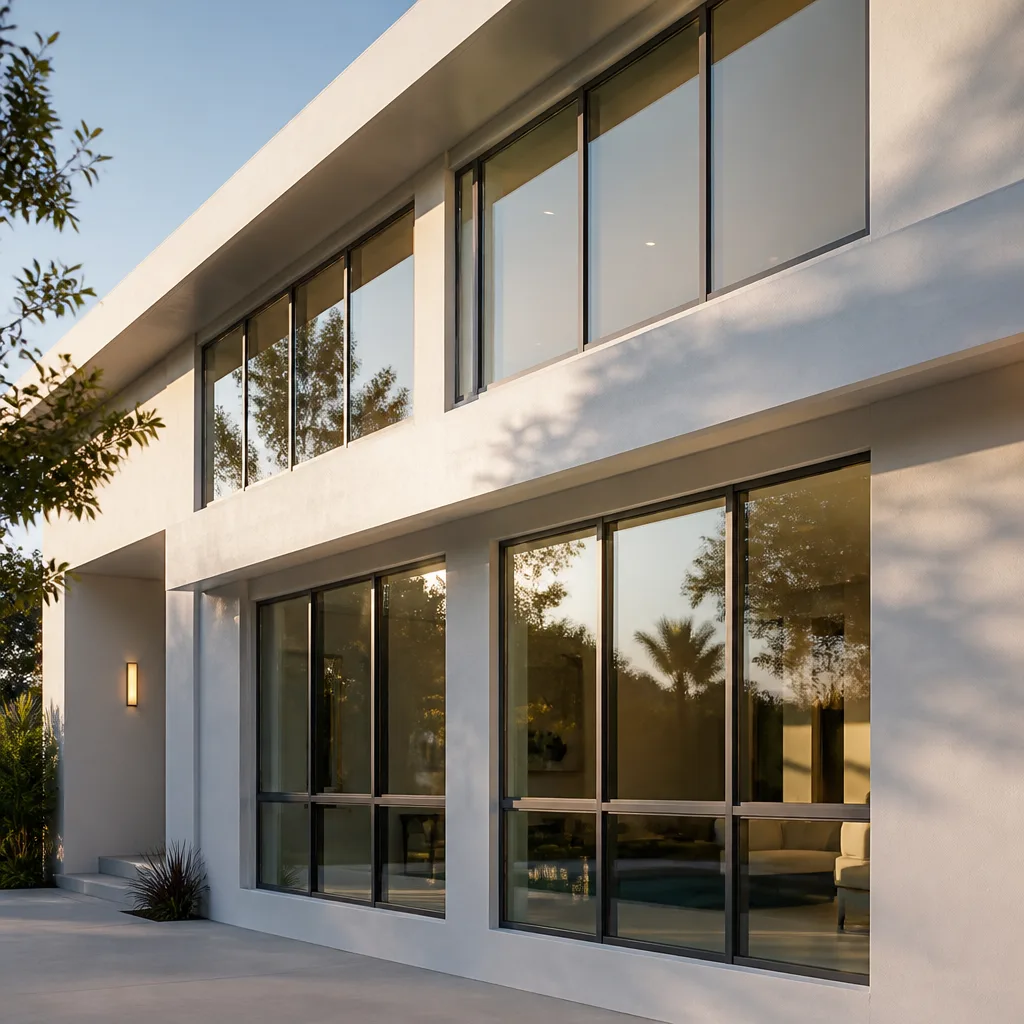
Hialeah’s highest wind events typically occur in September and October. The inspection that follows is sequential and specific. Skip a step, and you miss a failure mode.
Step 1: Exterior glass and frame survey from ground level. Walk the perimeter without binoculars first. You’re looking for obvious damage: cracked glazing, displaced frames, missing fasteners, or debris impact marks. Document everything with photographs before moving anything. The photo record is evidence for insurance and, if the product failed, for warranty claim.
Step 2: Hardware operation test. Open and close every operable unit. Note any change in resistance, noise, or travel distance. A sash that previously slid 24 inches and now slides 22 inches has a track obstruction or roller degradation. A door that previously latched with light pressure and now requires force has frame racking or fastener loosening.
Step 3: Sealant and weatherstripping inspection. Wind pressure deforms frames slightly. Repeated cycling fatigues sealant at the frame-wall interface. Look for fresh cracking, displaced beads, or gaps where the sealant has pulled away. Check weatherstripping compression: close the sash or door on a strip of paper. Pull the paper. It should resist moderately. If it pulls free without resistance, the weatherstripping has compressed permanently or the frame has shifted.
Step 4: Interior finish inspection. Check drywall returns, window stools, and door casings for new stains, swelling, or paint failure. In Hialeah’s concrete block construction, water that enters at the frame perimeter travels within the wall before appearing inside. A stain at the interior sill may originate from a leak at the head that traveled down the jamb cavity.
Step 5: Functional test of locking and latching. Impact-rated products depend on proper latching for their pressure rating. A multipoint lock that no longer engages all keeps has been disturbed by wind loading or frame movement. This is not a maintenance item; it is a safety item requiring immediate professional evaluation.
What requires a licensed contractor versus owner remediation? Surface cleaning, weep hole clearing, and minor sealant touch-ups are owner-appropriate. Glass cracks, frame displacement, hardware failure, and any compromise of the impact-rated assembly require a Florida-licensed window and door contractor. The door installation and window replacement specifications for HVHZ products are regulated under Miami-Dade County product control, and unlicensed work voids both the product approval and the insurance coverage.
Lubricants and Cleaners: What Works on HVHZ Hardware
The wrong product causes more damage than no maintenance at all. We have replaced hardware in Hialeah homes where the owner used the correct maintenance schedule with the incorrect chemistry.
Lubricants: use dry-film silicone or PTFE-based products. CRC 2-26, Blaster Dry Lube with Teflon, or equivalent products leave a film that does not attract dust or salt. Apply sparingly. Excess lubricant in tracks becomes a debris trap.
Never use WD-40 on window or door hardware. WD-40 is a water displacer and light penetrating oil, not a lubricant. It evaporates within days, leaves a sticky residue that binds with salt and dust, and can degrade nylon roller wheels and weatherstripping. We’ve disassembled rollers where the WD-40 residue had polymerized into a tar-like coating that seized the bearing.
Cleaners: mild dish soap and water for frames and glass. A few drops in a gallon of warm water, applied with a soft sponge or microfiber cloth. Rinse with clean water. Dry with a squeegee or lint-free cloth to prevent water spotting.
Never use bleach-based cleaners, ammonia-based cleaners, or abrasive pads on impact window frames. Bleach oxidizes anodized aluminum finishes, creating permanent discoloration. Ammonia degrades the edge seal of insulated glass units, leading to fogging between panes. Abrasive pads scratch powder-coated finishes, creating sites for salt corrosion initiation.
For stubborn salt residue on coastal Hialeah homes, particularly those east of Red Road or near the Palmetto Expressway corridor with bay exposure, use a 10:1 water-to-white-vinegar solution. Apply, dwell for two minutes, rinse thoroughly. The mild acid neutralizes salt without attacking frame finishes.
On Sightline Windows & Doors Hialeah home service visits, our technicians carry manufacturer-specified maintenance products for the eight lines we install: PGT, CGI, CWS, ES Windows, ECO Window Systems, Mr-Glass, Therma-Tru, and ViewLux. Each has specific finish and hardware requirements. The measured survey we leave with every customer notes the product line and series, so the correct maintenance protocol can be referenced years later.
Hialeah’s Urban Heat Island and Sealant Life

This is the factor most seasonal maintenance guides omit, and it matters more in Hialeah than in any surrounding municipality.
Hialeah’s dense development, extensive impervious surface, and limited tree canopy create an urban heat island effect that raises ambient temperatures 3-6°F above suburban Miami-Dade addresses during overnight hours. Sealant cure chemistry is temperature-dependent. The sustained elevated temperatures in Hialeah accelerate the oxidative degradation of polyurethane and silicone sealants, particularly on south and west elevations where solar loading compounds the effect.
What this means for inspection frequency: a sealant bead that might last 10 years in a Kendall or Pinecrest address may show degradation in 6-7 years in Hialeah. The inspection schedule in this guide, twice yearly in April and October, reflects this acceleration. A homeowner relying on a generic “every five years” sealant inspection will miss the degradation window.
The specific failure mode we document most often in Hialeah is not adhesion loss at the substrate, but cohesive cracking within the bead body. The sealant remains stuck to both surfaces but cracks through its center, creating a path for water that is invisible from the exterior until interior damage appears. This is why the April inspection includes probing with a plastic spatula: gently press into the sealant bead. It should deform slightly and rebound. A bead that cracks or crumbles has reached end of service life.
For new installations, we specify sealants with elevated temperature ratings and UV stabilizers appropriate to Hialeah’s conditions. The product selection in our window installation process includes this specification in the written scope; the customer receives the product data sheet as part of the documented photo record.
Pre-Storm Preparation for Impact Windows
Impact-rated windows and doors do not require the plywood or shutter preparation that non-impact openings demand. They do require specific preparation that many Hialeah homeowners get wrong.
What to do before a named storm:
- Close and latch all operable sashes and panels. Impact ratings assume the unit is in the locked position. An unlocked sash is a pressure relief point that can fail the entire assembly.
- Verify multipoint lock engagement. On doors, the deadbolt and all auxiliary locking points should be engaged. On windows, the sash lock and any tilt latches should be fully seated. Listen for the click or positive stop that indicates full engagement.
- Remove window screens if wind speeds are forecast above 74 mph. Screens are not structural components. They can be torn from the frame and become debris, or they can trap wind pressure against the glazing in ways the engineering did not anticipate.
- Clear the exterior of furniture, planters, and loose objects that could become impact debris. Impact windows are rated for specific missile impacts. A heavier or sharper object than the test standard, or multiple impacts in the same location, can exceed the rating.
- Verify weep hole covers are in place. These prevent wind-driven rain from entering the frame cavity through the drainage path.
What not to do:
- Do not apply tape to glass. This is a holdover from pre-impact construction that provides no structural benefit and leaves adhesive residue that degrades edge seals.
- Do not lubricate hardware immediately before a storm. Fresh lubricant attracts wind-blown debris and can compromise lock engagement if it migrates to contact surfaces.
- Do not adjust or tighten fasteners. If hardware has loosened, it requires evaluation, not a wrench. Over-tightening can strip threads or deform frames.
After the storm passes, follow the September-November inspection protocol in this guide. The window replacement jobs we perform after named storms often trace to pre-storm preparation errors, not product failure.
Common Mistakes to Avoid
- Using WD-40 on window hardware. It evaporates, leaves a sticky residue, and degrades nylon and rubber components. We’ve replaced rollers in Hialeah homes where WD-40 residue had polymerized into a tar-like coating. Use dry-film silicone instead.
- Cleaning impact windows with bleach-based products. Bleach oxidizes anodized aluminum and degrades the edge seal on insulated glass units. A Hialeah homeowner in the Brightons neighborhood used bleach monthly for two years; the fogging between panes required sash replacement, not cleaning.
- Ignoring the dry season. Salt corrosion accelerates when rainfall stops. The hardware you lubricate in January operates smoothly in July. The hardware you ignore in January seizes by March.
- Sealing weep holes with caulk. Homeowners sometimes mistake weep holes for construction gaps and seal them. This traps water in the frame cavity, causing internal corrosion and, in freezing events (rare but not impossible in Hialeah), ice jacking that deforms frames.
- Assuming impact rating equals maintenance-free. Impact windows resist wind-borne debris. They do not resist salt corrosion, UV degradation, or hardware wear. The rating is a performance specification, not a durability guarantee.
- Delaying post-storm inspection until damage is visible inside. Water intrusion paths often develop for weeks before interior staining appears. The inspection protocol in this guide catches failures before they propagate.
- Using generic hardware store fasteners for replacement. Thread pitch, head profile, and material specification matter for load distribution in impact-rated assemblies. A #8 sheet metal screw from a hardware aisle does not substitute for a manufacturer-specified fastener.
When to Call a Professional
Some conditions require a Florida-licensed window and door contractor. Glass cracks or chips, frame displacement or racking, hardware failure on impact-rated units, and any compromise of the pressure seal or impact rating are not owner-serviceable. The Miami-Dade County product control system requires that HVHZ-rated products be installed and repaired under the original approval documentation.
Water intrusion that persists beyond 24 hours after a rain event, or that appears at multiple openings simultaneously, indicates a systemic issue requiring professional diagnosis. Mold growth on interior finishes, even if the surface dries between events, indicates chronic moisture that will degrade wall components.
Sightline Windows & Doors Hialeah offers free estimates in Hialeah - call (786) 574-2745. Every estimate begins with a measured survey you keep, and the written quote cannot differ from that document under Haven Clause 1. We also provide free second opinions on any written estimate from another contractor.
Frequently Asked Questions
Professional inspection and maintenance for a typical Hialeah home with 12-15 openings runs $180-$340, depending on access conditions and the specific hardware types installed. This covers lubrication, weep hole clearing, sealant inspection, and operational testing. Repairs or sealant replacement are quoted separately with line-item pricing. Call (786) 574-2745 for an exact quote - estimates are free.
Inspect hardware and drainage monthly, sealant twice yearly in April and October, and perform the full post-storm protocol after any named storm or sustained winds above 50 mph. Hialeah’s urban heat island accelerates sealant degradation compared to suburban Miami-Dade, so the twice-yearly schedule is minimum, not generous.
No. Haven Clause 1 requires that the written quote and the measured survey be the same document. The price we name before work starts is the price on the final invoice. If we encounter concealed damage during service, we document it, stop work, and present a revised written scope before proceeding. No surprises.
Yes, for any work requiring a permit under Miami-Dade County or City of Hialeah code. Replacement of existing windows and doors in the same opening typically requires a permit. Repair work that does not alter the opening or the product rating may not. We handle permit application, inspection scheduling, and final approval as part of the written scope. The permit status is documented in your photo record.
Yes, a 10:1 water-to-white-vinegar solution is effective for salt residue removal on anodized and powder-coated aluminum frames. Apply, allow two minutes of dwell time, rinse thoroughly with clean water, and dry. Do not use vinegar on bare steel fasteners or on natural stone sills, as the mild acid can etch those surfaces.
Sealant life in Hialeah is typically 6-7 years for south and west elevations, compared to 10+ years in cooler, less UV-intense locations. The urban heat island effect raises overnight temperatures, accelerating oxidative degradation. North-facing elevations may achieve 8-9 years. The only way to know your specific condition is twice-yearly inspection and replacement at first sign of cohesive cracking or adhesion loss.
The Bottom Line
Hialeah’s climate imposes a year-round maintenance obligation that no single seasonal checklist satisfies. Salt corrosion peaks when rainfall stops. UV degradation accelerates where urban density traps heat. Wind loading tests hardware when homeowners are least prepared. The month-by-month calendar in this guide, January hardware lubrication through September post-storm inspection, distributes maintenance across the year so no failure mode goes unaddressed. Use the correct chemistry on your hardware, inspect sealant twice yearly with attention to Hialeah’s heat island effect, and know the threshold between owner-appropriate maintenance and licensed contractor requirements. The 365-Day Done Right Promise that governs every Sightline installation since 2012 applies to the work we perform; the work you perform between our visits protects the investment.
Written by Sonia Raman, Owner at Sightline Windows & Doors Hialeah, serving Hialeah since 2012.